
- 作者:平顺
- 来源:势不可挡
- 发布时间:2026-08-26
王者荣耀
Designation of Deutsche Bank as yuan-clearing bank in EU adds impetus to broader trade_我的网站

一 | A sizable piece of trash discovered in the middle of a sheep pasture in Eastern Australia's New South Wales may be space debris from a SpaceX mission and connected to a loud blast reported in early July in the area, Australian ABC News has reported.,According to the report, numerous people who heard the sound on July 9 turned to social media to report it from as far away as Albury, Wagga Wagga, and Canberra to the Snowy Mountains in southern New South Wales.,An extraordinary nearly three-meter-high object was reported by farmer Mick Miners, who runs a sheep farm at the remote area of Numbla Vale.,"I didn't know what to think, I had no idea what it was," he told the outlet, while his neighbor, Jock Wallace, who also stumbled upon strange debris said he "didn't hear the bang, but my daughters said it was very loud. I think it's a concern it's just fallen out of the sky. If it landed on your house it would make a hell of a mess.",As we all wait for the Chinese booster to impact-Here’s some photos of pieces believed to be from SpaceX’s Crew-1’s Trunk, which landed in Australia on July 9th, but discovered in farmland on July 25thThese are large pieces; which could be dangerous & fatal & more frequent. pic.twitter.com/ImaO4YKQzL— Earth Consuming Mike (@LCS_Big_Mike) July 29, 2022,Serial numbers were seen on one of the items discovered on his premises. Astrophysicist Brad Tucker from the Australian National University College of Science reportedly claimed that the debris was most likely from the craft's unpressurized crew trunk.,SpaceX's Crew Dragon Lifts Off for Its First Operational Mission to ISS16 November 2020, 00:29 GMT,He said that it might be the biggest piece of debris to have been found in Australia since NASA's Skylab space station crashed to Earth above Esperance, Western Australia, in 1979.,"In photographs of the debris you can clearly see charring, which you would expect from re-entry," Tucker told the outlet last Friday. "It is very rare to see, because they don't usually land on land, but in the ocean.",I just got back from Dalgety, NSW. I was busy confirming that parts of a @SpaceX Crew-1 Trunk capsule crashed into a few paddocks in rural NSW! More info to come:https://t.co/2VJzeYMhhn pic.twitter.com/sQsE4WAxRq— Brad Tucker (@btucker22) July 29, 2022,In the Pacific Ocean, between Australia and New Zealand, he added, the spacecraft was intended to make its landing. According to the expert, the craft was probably traveling at 25,000 kilometers per hour when it made re-entry and left behind debris, and it was probably responsible for the July 9 blast heard by many people in the area.,This Monday, in an interview on a local radio, quoted by the Daily Mail, Tucker confirmed that the debris belonged to the Crew-1 SpaceX mission spacecraft.,"This is most definitely space junk which was part of the SpaceX Crew-1 trunk," he is quoted as saying. "SpaceX has this capsule that takes humans into space but there is a bottom part... so when the astronauts come back, they leave the bottom part in space before the capsule lands.",The component, most likely made of aluminum and carbon composites, has been in orbit since November 2020, according to the expert.,"There was a plan of having it come down on Earth and purposely hitting the Earth's atmosphere so it would break apart and land in the ocean," he said.,It took some time to find the object, according to Tucker, because it had fallen far from Miners' house.,"From a distance it looks like a tree almost, like a burnt tree, and then you get closer and you realise 'hey that's not right'," Tucker explained.。
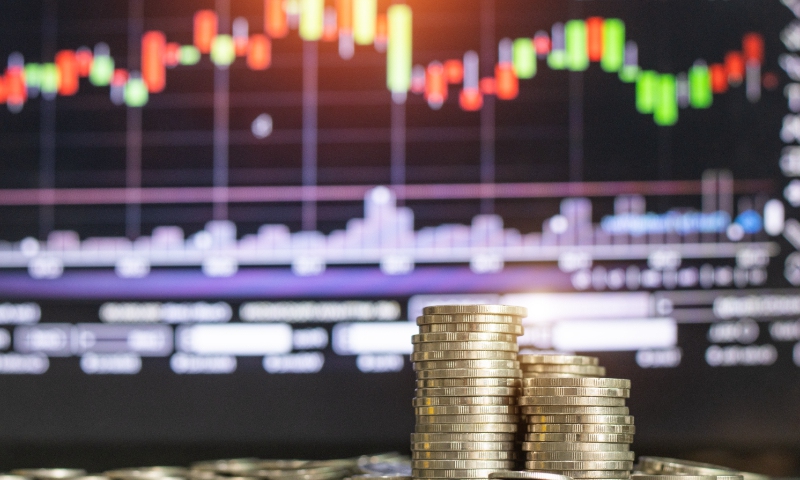
The designation of Deutsche Bank, a key and influential bank in Europe, to serve as the yuan-clearing bank will greatly facilitate and expand the use of the yuan in the EU market, providing more impetus to broader China-EU economic and trade ties, a Chinese analyst said on Tuesday.
The People's Bank of China (PBC), the central bank, announced on Monday that it had decided to authorize Deutsche Bank to serve as the yuan-clearing bank in Frankfurt, Germany, based on a memorandum of understanding with the Deutsche Bundesbank.
The move came as China-EU trade and economic ties continue to deepen and bilateral trade continues to expand, despite recent restrictions imposed by the European Commission.
In a statement sent to the Global Times on Monday, Deutsche Bank said that following the appointment by the PBC, it will facilitate direct end-to-end processing, clearing and settlement services for cross-border yuan transactions for European financial institutions and businesses, acting as a local bridge to China's payment systems.
Deutsche Bank, a global systemically important bank as well as the world's largest euro-clearing bank, said that it is the first foreign bank in Europe to receive this designation.
"Securing yuan-clearing capability in Europe reinforces our role as a trusted global clearing partner and our long-standing support for yuan internationalization. It strengthens China-Europe financial connectivity and enhances our ability to support clients' cross-border trade and investment flows with greater choice and flexibility," Alexander von zur Muehlen, CEO of Asia Pacific, Europe, Middle East & Africa and Germany at Deutsche Bank, said in the statement.
Xi Junyang, a professor at the Shanghai University of Finance and Economics, told the Global Times on Tuesday that while a number of Chinese banks are already performing yuan-clearing functions in the EU, the addition of Deutsche Bank, with its deep roots in the local market, carries great significance.
"Banks have different client bases, and Deutsche Bank has many European companies as its customers. With the appointment, these market participants enjoy a far greater degree of facilitation and ease in tapping yuan use cases," said the professor.
Companies and financial institutions can also avoid risks of foreign exchange losses as they can now directly choose yuan-euro settlement and bypass the use of a third currency, the expert said, noting that China-EU trade and investment ties will be one step closer with a local clearing bank coming onboard.
Tian Lihui, dean of the Institute of Financial Development at Nankai University, told the Global Times on Tuesday that the latest development, some 12 years after the first-yuan clearing bank form a Chinese bank was set up in Frankfurt, marked a milestone as the yuan-clearing system in Europe has evolved from a model where "Chinese entities handle clearing for Europeans" to one where "Europeans handle yuan-clearing themselves."
The decision by one of Europe's largest domestic banks to integrate into the yuan-clearing system signals that China-Europe financial cooperation is moving beyond the shallow level of facilitating trade settlements into the more substantial level of jointly building financial infrastructure, Tian said.
For both China and Europe, this move represents a mutually beneficial institutional alignment, Tian said. "China gains greater depth in the offshore yuan market, while Europe secures an additional strategic option amid the contest of major currencies."
Brussels has recently been intensifying its use of restrictive trade and regulatory tools across sectors ranging from clean technologies to digital infrastructure and foreign subsidies, with many of these measures seen as directly affecting Chinese firms and adding strain to China-EU economic relations.
However, despite these moves, deepening industrial and supply chain integration and the strong complementarity of the two economies have continued to push bilateral trade to new highs. In the first seven months of 2026, China's total trade with the EU stood at 3.67 trillion yuan ($543.90 billion), up 9.5 percent year-on-year, data from China's General Administration of Customs showed on Friday.
As China-EU economic and trade ties continue to expand and deepen, demand for the yuan to be used in the EU market will rise proportionately, and more EU banks will likely be authorized to serve as yuan-clearing banks, Xi Junyang said.
Financial cooperation between the world's largest trading bloc and the largest trading nation has accelerated in recent months. In May, the PBC renewed and expanded a bilateral currency swap agreement with the National Bank of Serbia, increasing the value of the swap from 1.5 billion yuan to 5 billion yuan.
Almost 80 percent of the surveyed Chinese companies operating in the EU plan to expand their investment, even amid tightening policies in the EU and an increasingly complex business environment, according to a report published by the Chinese Chamber of Commerce to the EU and the China Economic Information Service in March. Fostering cooperation in emerging industries and cross-border finance have been highlighted by industry insiders as new growth drivers of China-EU trade and economic cooperation.
The yuan accounted for 3.1 percent of global payments in June, rising from 2.75 percent in the previous month, and ranking as the fifth most active currency for global payments by value, according to a report from the Society for Worldwide Interbank Financial Telecommunication. In terms of trade finance, the yuan ranked second with a market share of 8 percent.
。
Current article:http://goc.pisezuibanzoukou.cyou/wtpq/1l3y6k5.html
Published on:07:24:00
- 本文标签:
- 卡萨布兰卡